
Trending
This story is from August 1, 2019
Land of the rising sun
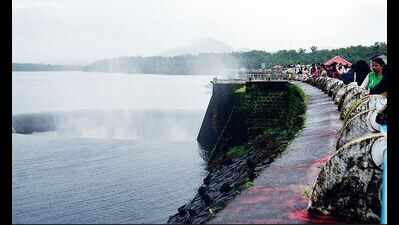
Located barely 26km from Goa's commercial capital Margao, and 61km from Panaji, Uguem has largely succeeded in maintaining its rustic charm.

“Uguem is among the state's distinct villages as its sons and daughters share an ancestral bond with the land. Unlike other villages that have been witnessing rapid transformation, it has managed to keep its quaintness intact. This is despite the fact that some of the locals have had a brush with mining in the past,” says chronicler Alfred Fernandes, who resides in Novovaddo.
The picturesque village is also home to the Selaulim dam, the state's largest water reservoir. Completed in the year 2000 and spread across 24sq km, the dam is considered to be the lifeline of South Goa.
Uguem is bordered by Sanguem town and the villages of Bhati and Kalay. It comprises seven panchayat wards that are further divided into traditional 'vaddos'. These include Devlamoll, Pedamoll, Udamoll, Bamonmoll, Voilovaddo, Funtermoll, Cormonne, Novovaddo, Vikasnagar, Damal, Pajimol, Ponsamoll, Chireabandh, Bodermoll, Dessaiwada, Valkini Colony No 1, Saudimoll, Temchivaddo, Sadibagh, Cotarli, Zorivaddo, Gaunkarvadda, Mugoli, Kamtibagh, Maragan, Pangal and Tariakormone.
That the village remains rooted in its agrarian ancestry is evident from its spiritual inclinations. Folk researcher Pandurang Phaldesai says that apart from the main deity Hemaddev, locals have traditionally invoked two affiliate deities, Siddheshwar and Vagro. “The latter, a tiger spirit, was propitiated by agricultural and pastoral communities from ancient times to seek protection of their cattle,” he explains.
Sarpanch’s take
Broadening the village's existing roads and constructing new ones is a priority. The panchayat also seeks to pass a resolution requesting the government to regularise around 500 houses that have come up over the past 15 years. State authorities need to focus on creating environment-friendly livelihood opportunities here
Arjun Naik
Residents Speak
Uguem is blessed with an abundance of flora and fauna. It is also home to the majestic Selaulim dam. The Hemaddev temple is an abode of the village's 'gramdevta' (main deity), who is considered to be an avatar of Lord Shiva
Sanjay Vasant Parwar, Devlamoll
The village has a rich cultural history. The vadekars who headed Devlamoll, Funtermoll and Cormonne, would carry a sword to symbolise leadership. They were called to initiate any significant event, be it a wedding, harvesting of the first grain or thatching of houses
Victorino S Colasso, Devlamoll
POPULAR IN THE VILLAGE
Sebastiao Colasso, Manuel Colasso & Minguel Colasso | Served as ‘vadekars’ from pre-Liberation days right up to the 1980s
Satyawan Parwar | Harmonium player
Crispino Fernandes | A businessman, who was the first in the village to own a truck
Piedade Fernandes | Assistant commissioner of excise and trumpeter, known as Piety Sir in tiatr circles
Alfred Fernandes | Former vice-principal of St Xavier’s College, Mapusa
Victorino S Colasso | Village chronicler and accounts officer at the directorate of accounts, Margao
Cristavao Fernandes | Tiatrist
Sanjay Vasant Parwar | Village chronicler
Jack Paul Colasso | Goa police sub-inspector
Dinesh Gomes | Asst electricity engineer
Dinesh Bhandari | Junior PWD engineer
Heritage Trail & LOCAL Landmarks
Hemaddev temple
Is over 500 years old and is located in Devlamoll. Its ‘zatra’ (pilgrimage festival) is celebrated in February
Mahadev temple
Protected by the Archaeological Survey of India, this temple lies close to Selaulim dam. It was originally located 17km away in the village of Curdi, which was later acquired for the Selaulim irrigation project and has been submerged since
Our Lady of Piety chapel
Affiliated to the Church of Our Lady of Miracles in Sanguem, the chapel in Voilovaddo was founded in 1828 and was reconstructed in 1995. Its feast is celebrated on the second Sunday of November
Voilovaddo Zor
This natural spring once catered to the village's drinking and irrigation needs. It presently lies neglected
Ancestral home of the Fernandes family
Considered to be the village's oldest residence, this house is over 150 years old. It lies in Novovaddo
Timblo mining pit
Now brimming with water, this large crater in Chireabandh is proof of the village’s earlier tryst with the iron ore mining industry that had provided around 500 people with jobs
Missionary Sisters of Our Lady of Pilar
The Funtermoll-based centre, which is run entirely by nuns, operates a play school in the village
Uguem Rising Club Football Ground
Is a hotspot for villagers to play football and lies close to the Chapel of Our Lady of Piety
Government Primary School
Located at Voilovaddo, this institution was established soon after Liberation. Marathi is its medium of instruction
Uguem bridge
Constructed over the Uguem river in 2003. It links the village to Kalay and Karnataka
End of Article
FOLLOW US ON SOCIAL MEDIA







Hot Picks
TOP TRENDING
Trending Stories
In City
Entire Website
- Monster vs Monster: WWE announced massive match for this week's Monday Night Raw
- UPI transaction limit to change from September 16! Here are the new limits for various UPI payments
- File movement linked to weight of money: Nitin Gadkari
- Apple's biggest 'iPhone update' for year 2024, iOS 18, rollout starts today - September 16: India time and how to prepare your iPhone for iOS 18 download
- Arvind Kejriwal's resignation: Who will be next Delhi CM? Atishi seen as top choice
- UP medical aspirants converting religion to secure MBBS seats: A look at NEET UG admission criteria around minority reservation rules
- Protests against students wearing hijab in school play, principal forced to apologize for promoting religious harmony
- Pitru Paksha 2024 Date and Time: Know Significance of Shradh Paksha
- Andhra suspends 3 IPS officers for 'framing', arresting Mumbai actress
- The 3 Strongest Zodiac Signs: Powerhouses of the Zodiac Wheel
- 'Be cautious': VP Dhankhar reacts to Supreme Court's 'caged parrot' remark on CBI
- Docs sit down for talks with Mamata; minutes of meet to be recorded
- Will Atishi replace Arvind Kejriwal as Delhi CM?
- 'I had a birdie putt': Trump's first reaction after 2nd assassination bid
- Kohli's jersey hogs limelight in Pakistan during Babar Azam's match
- 'No talks with Pak till ...': Amit Shah accuses NC, Cong of 'nurturing' terrorism
- Cow vigilantes killing a Brahmin is the wake-up call India needed
- Apple's biggest 'iPhone update' for year 2024 rollout starts today
- Make It Priceless: Gift them a customized TOI Front Page. Know More
- Meghan, Harry 'concerned' over 'dictator' report. They probably know who did it

Popular Categories
Hot on the Web
Top Trends
Who is Ryan RouthUPI Transaction LimitArvind Kejriwal ResignationNEET UG Admission CriteriaKolkata Doctor Rape CaseBorder Gavaskar TrophyRohit SharmaSports Stars Turned Power CouplesIBPS RRB Clark PO ResultDonald TrumpBianca Belair Net WorthIndia vs Korea LiveBMW Accident Madhya PradeshIndore BMW CrashPrince HarryMiami Dolphins OwnerLive Cricket Score
Trending Topics
Living and entertainment
Latest News
4 types of tea to improve gut health and ease digestive issuesWho was Illia 'Golem' Yefimchyk, the Belarusian bodybuilder who consumed 2.5 kg of meat and 108 sushi pieces daily before his death at 36?Vempalle Shareef's story is now a lesson for degree students in Andhra PradeshWhen Shah Rukh Khan performed 'Kanyadaan' at Farah Khan's wedding- See PICSBike rally held to raise voter awareness in Jammu and Kashmir's Doda ahead of assembly electionsFather-son duo Eugene and Dan Levy's dazzling entrance at the EmmysLiza Colon becomes 1st Latina to win Best Supporting Emmy Award'Oh no!': Hilarious goof-up leads to missed catch, leaves bowler in smile. WatchJr NTR on shooting under water scene for 35 days in 'Devara Part 1': It is an important sequence!Last Lunar Eclipse of 2024: What it means for your zodiac signTop NFL Superstars Who Are Vegan: Derrick Morgan, David Carter, Theo Riddick and moreAbhishek Kumar shares selfies with Alia Bhatt; recalls the time when he worked as a crowd artist in ‘Humpty Sharma Ki Dulhaniya’Jessica Gunning wins her 1st Primetime Emmy for 'Baby Reindeer'Shocking! Man celebrates birthday by lying among massive Pythons‘Stree 2’ star Shraddha Kapoor to reveal her character name! But there’s a catchSathiyan set to partner Sreeja in mixed doubles'Seven varsities in Odisha have potential to be in top 100'Capricorn, Daily Horoscope Today, September 16, 2024: Harmonious relationships with partners are likely
Copyright © 2024 Bennett, Coleman & Co. Ltd. All rights reserved. For reprint rights: Times Syndication Service